The Space for Inspiration Academic Challenge was launched in April 2026, to identify promising research concepts with long-term commercial potential in space-related markets.
Open to universities, research institutes and academic laboratories from ESA Member, Cooperating and Associated States, the challenge invited applications across three tracks:
- Health & Life Sciences
- Advanced Materials & In-Space Manufacturing
- Space Resources – Construction Applications
Applications were evaluated based on their innovation potential (60%), technical feasibility (20%), and commercial potential (20%).
Following the evaluation process, three teams from each track have been selected as finalists. Over the coming weeks, the shortlisted teams will work with the relevant BSGN Industry Accelerators to further develop and strengthen their concepts before presenting them at the Space for Inspiration 2026 Pitch Competition.
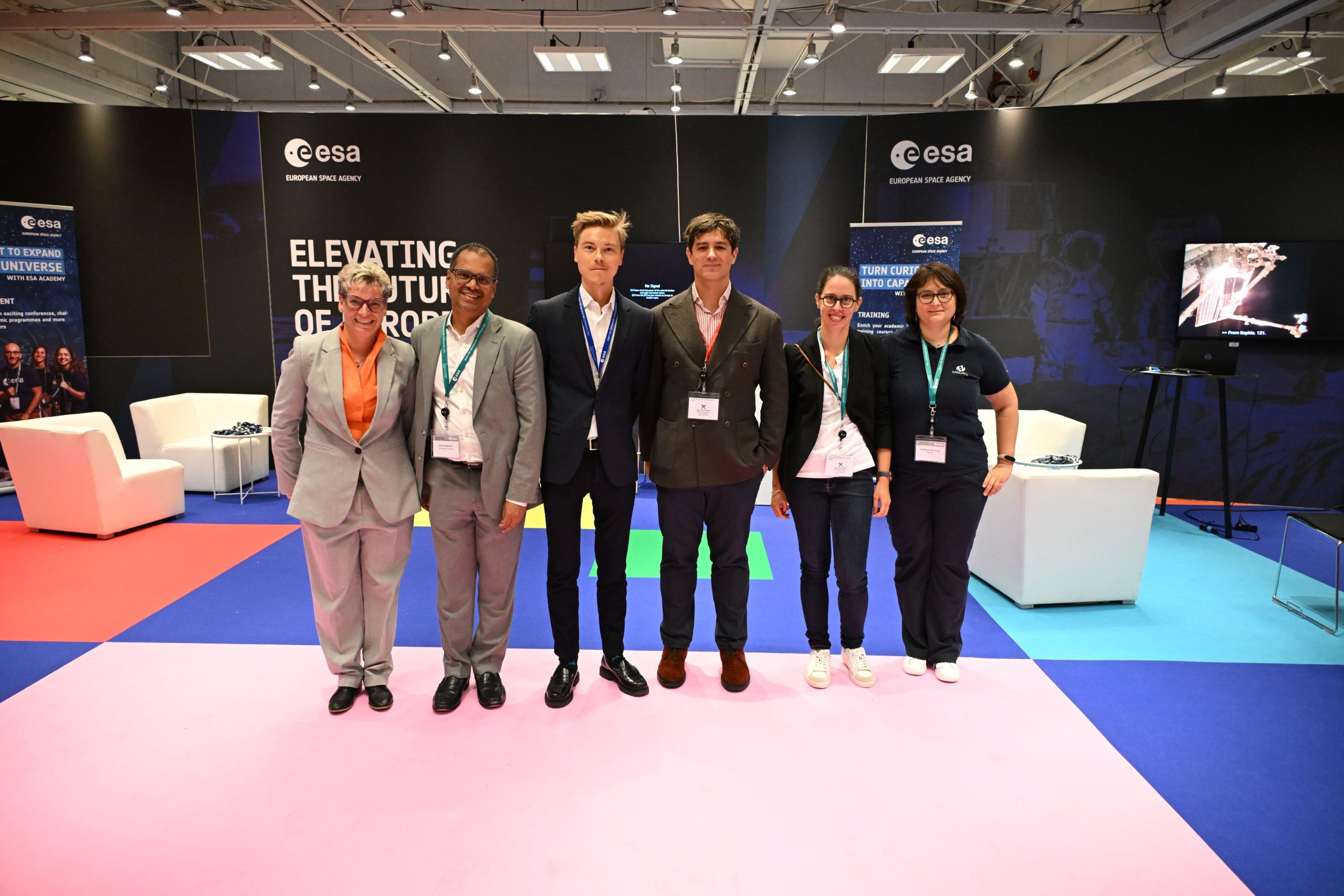
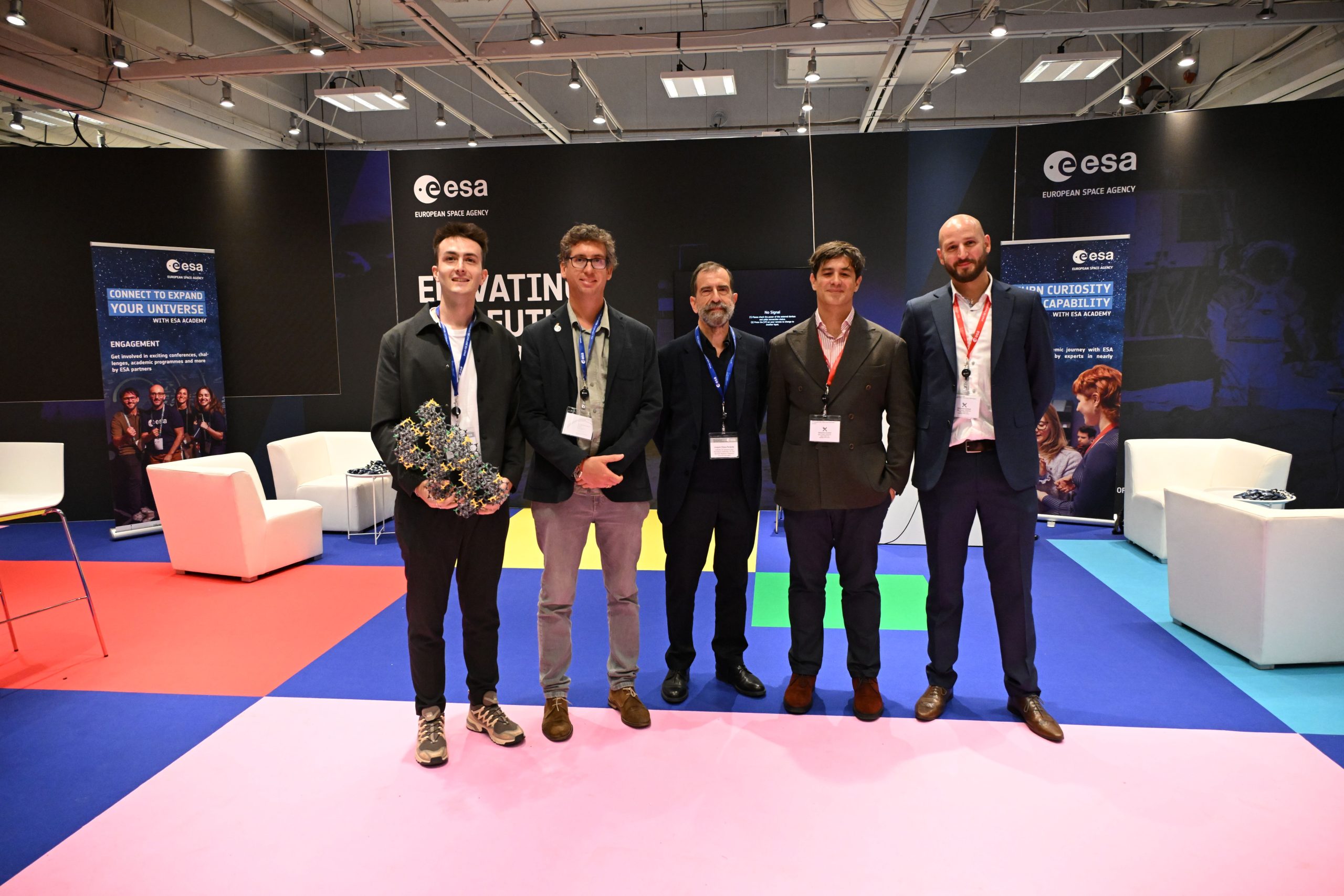
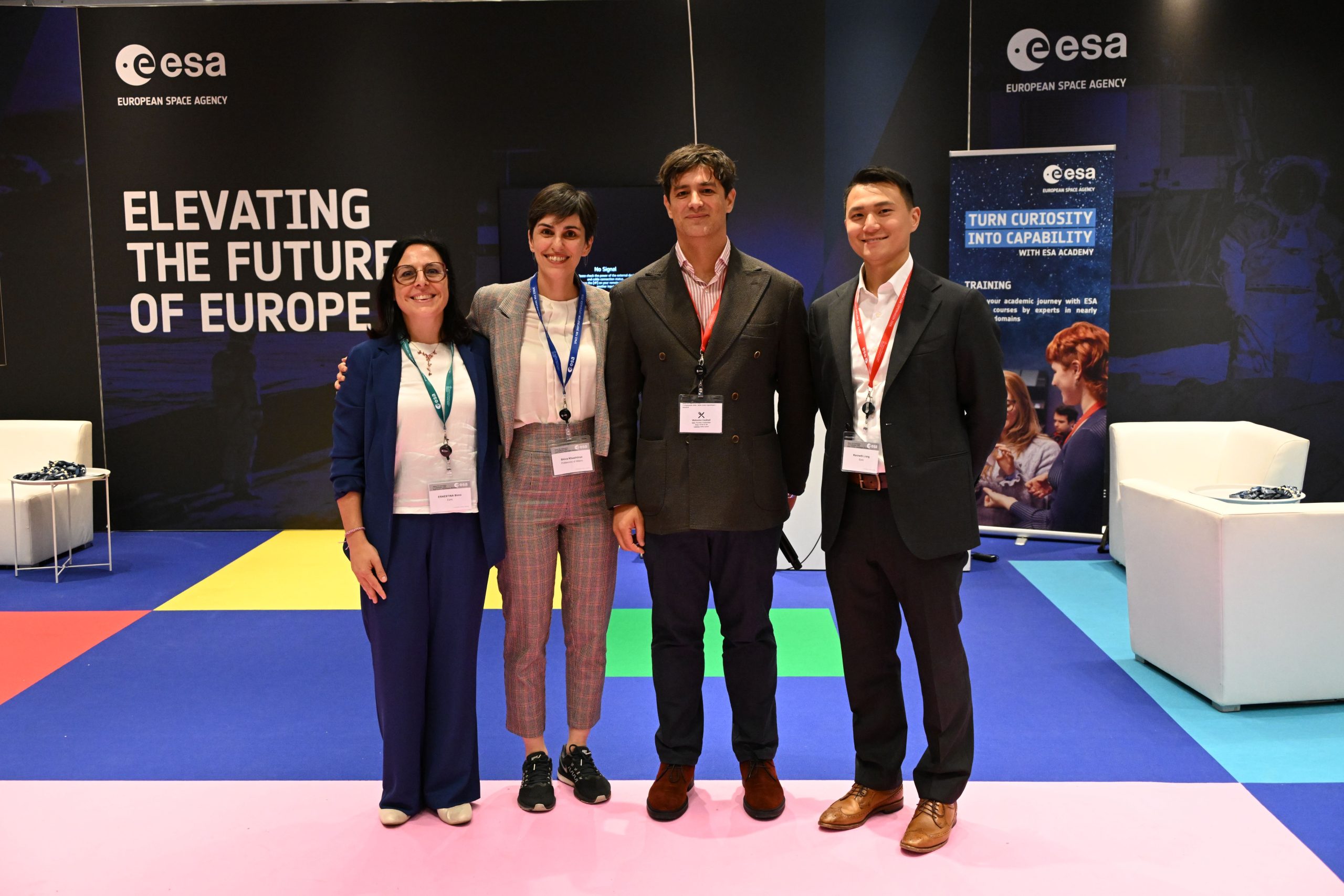
Following the Space for Inspiration 2026 Pitch Competition, one winning team was selected from each challenge track. These teams impressed the jury with the strength of their innovation, technical feasibility, and commercial potential. The winning projects are listed first within each track and will now receive tailored technical and commercialisation support from the relevant BSGN Industry Accelerator. The remaining finalist teams are also recognised for the high quality of their proposals and their contribution to advancing new opportunities in the space economy.
The selected projects are grouped by track below.
Health & Life Science
Switzerland
Space-enabled novel stem cell therapies for tissue engineering and regenerative medicine.
Neural injuries are among the most difficult medical conditions to treat, without effective therapies available. While stem cell therapies offer significant promise, their clinical efficacy is limited by poor cell survival and regenerative performance.
PRIME-NERVE aims to develop a novel space-enabled bio-manufacturing approach that uses microgravity to enhance the regenerative potential of stem cells. Unlike drug-based or genetic interventions, our technology harnesses altered gravity to enhance stem cell function, creating a scalable platform for broader regenerative medical applications.
Our preliminary results from simulated microgravity demonstrate enhanced stem cell regenerative properties, supporting the development of next-generation therapies for tissue repair and regeneration. By combining regenerative medicine, space biology, and advanced biomanufacturing, PRIME-NERVE transforms space research into healthcare innovation. The project will benefit patients on Earth while generating knowledge to protect astronaut health during long-duration space missions. Thus, our project potentiates the commercial, societal, and scientific value of space-enabled medical innovations.
Space as a tool. Patients as the mission.
Switzerland
AstroDent is developing the first autonomous human oral tissue payload in orbit, a platform designed to study how microgravity and space radiation affect the regeneration of human dental and jawbone tissues. While astronauts are known to experience significant bone loss during long-duration missions, very little is understood about how space conditions influence teeth, dental pulp, or the surrounding jawbone. AstroDent combines advanced organ-on-a-chip technology with regenerative biomaterials and naturally derived bioactive molecules to investigate how these tissues respond in orbit. By generating the first mechanistic data on dental tissue regeneration in space, the project aims to support the development of future countermeasures for astronaut health during long-duration missions to the Moon and Mars. At the same time, the knowledge gained may accelerate the development of innovative regenerative therapies for patients on Earth, including treatments for bone defects, periodontal diseases, and other hard-tissue disorders.
France
CHO cells, the industry standard for monoclonal antibody (mAb) production, face critical challenges such as cell line instability, heterogeneity, and the need to balance yield with quality. MTInov, a French “Industrial Integrator” labeled since 2020 and renewed in 2022, aims to explore the impact of microgravity on CHO cells and mAb production. The goal is to validate microfluidic systems for CHO cell culture on Earth, compare their performance with standard stirred bioreactors, and assess the effects of microgravity on cell growth, IgG production, and cellular function, including transcriptomic and metabolomic profiling. In the second phase, MTInov will characterize space-produced mAbs for structure, glycosylation, aggregation, and biological efficacy. Future applications include optimizing terrestrial bioproduction, enabling in-situ space medicine for long-duration missions, and providing specialized services and premium contract research.
Advanced Materials & In-Space Manufacturing
Institute of Catalysis and Petroleum Chemistry of the Spanish National Research Council (ICP-CSIC), Spain
Imagine creating next-generation catalysts in space and bringing their benefits back to Earth.
A pioneering project, led by researchers at the Institute of Catalysis and Petroleum Chemistry of the Spanish National Research Council (ICP-CSIC), is exploring how microgravity can transform the growth of zeolite crystals—advanced materials used in pharmaceuticals, chemicals, and clean energy production. By growing these crystals in space, the researchers aim to achieve unprecedented levels of structural precision, creating catalysts that are more efficient than those produced on Earth.
The team will investigate whether space-grown crystals can deliver breakthroughs in two critical areas: the production of enantiopure catalysts for pharmaceutical manufacturing and enhanced catalysts for converting methanol into valuable fuels and chemicals. Critically, these high-performance crystals would be used as “seeds” to replicate their superior properties at industrial scale on Earth.
If successful, this space-enabled innovation could accelerate the transition to greener chemical processes, lower carbon emissions, and unlock a new generation of catalytic technologies with global commercial impact.
University of Oxford, UK.
What if tomorrow’s space infrastructure could be built from yesterday’s satellites?
This groundbreaking concept explores how more than 16,000 tonnes of human-made material already in Earth orbit could become a valuable resource for the future space economy. Instead of simply deorbiting retired satellites and orbital hardware, the project investigates novel microgravity-compatible techniques to selectively recover and reuse high-value metals directly in space.
Led by researchers at the University of Oxford, the initiative aims to solve a critical challenge in orbital sustainability: creating a missing link between space debris recovery and in-space manufacturing. By developing new methods for metal recovery in microgravity, the technology could provide reusable feedstocks for manufacturing replacement parts, supporting orbital servicing, and enabling future lunar and cislunar infrastructure.
The vision is clear: transform orbital waste into valuable resources, reduce reliance on materials launched from Earth, and help power a circular, sustainable space economy for generations to come.
University of Newcastle, UK
Could the future of secure communications be manufactured in space?
OrbitSeed is exploring a bold new idea: using the unique conditions of orbit to manufacture the next generation of quantum materials and devices. By harnessing the natural vacuum and microgravity of orbit, the project aims to manufacture ultra-precise quantum-light components that could power future quantum networks, cybersecurity systems, advanced sensors and satellite communications.
At the heart of the concept are atomically thin 2D materials that can generate single photons – the building blocks of quantum technologies. On Earth, these materials can suffer from contamination, strain and microscopic defects during manufacturing. OrbitSeed investigates whether space can provide a cleaner, more controlled environment to improve performance, consistency and scalability.
Led by Newcastle University, the project combines quantum photonics, advanced materials science and AI-assisted automated assembly to explore a future where orbit becomes a factory for high-value quantum components. If successful, OrbitSeed could unlock more secure digital infrastructure, accelerate the quantum economy and redefine how advanced technologies are made.
Space Resources – Construction Applications
Italy
BIOREC explores whether cooperative microorganisms can enable low-energy construction using lunar regolith. Microbial biocementation can consolidate loose material through calcium carbonate precipitation, but the microorganisms responsible may struggle to survive radiation, vacuum and other space-related stresses. BIOREC investigates whether a stress-resistant partner organism can protect the cementation microbe Sporosarcina pasteurii, preserving its viability and performance under space-relevant conditions. The project will assess microbial survival, mineral production, material microstructure and mechanical strength to determine where this approach is technically viable. The results could support future methods for regolith stabilisation, infrastructure repair, radiation shielding and lunar construction while reducing reliance on imported binders, high-temperature processing and heavy equipment.
Luxembourg
This project develops a water-free method for sorting lunar and Martian regolith into particle sizes suitable for construction and manufacturing. Strong bricks, concrete and 3D-printed structures require carefully controlled mixtures of fine and coarse particles, yet raw regolith is highly mixed, abrasive and difficult to process. Terrestrial separation techniques often depend on water, chemicals or consumable components that would be impractical beyond Earth. The proposed system uses tunable vibrations to separate particles according to their size, density and shape. This could provide an autonomous, low-maintenance and resource-efficient feedstock preparation technology for future landing pads, habitats and other infrastructure. The same approach may also offer terrestrial applications in mining and materials processing by reducing water consumption and waste.
Luxembourg
TESSERA investigates a radically simplified approach to lunar construction based on vibration-induced self-assembly. Instead of relying on complex robotic systems to position every component, the project proposes using controlled vibration to organise specially shaped blocks manufactured from sintered lunar regolith. These interlocking elements could assemble into strong, mortarless structures without terrestrial binders, scaffolding or highly precise robotic placement. The concept could reduce operational complexity, imported mass and the risk of equipment failure while enabling scalable construction of landing pads, roads, protective berms and habitat shells. TESSERA will assess whether topologically engineered regolith blocks can be reliably guided into stable, load-bearing structures, offering a potentially low-mass and consumable-free pathway for early lunar infrastructure.